Basic Information
| Field | Details |
|---|---|
| Name | Christos Dorje Walker |
| Also known as | Chris Dorje Walker; Dorje; Chris Walker |
| Nationality | Australian |
| Professions | Meditation teacher; Somatic psychotherapist; Ceramicist; Former Tibetan Buddhist monk |
| Core disciplines | Mindfulness, Qi Gong, somatic therapy, trauma-informed practice |
| Years active | 2000s–present |
| Base of operations | United Kingdom/Europe (recent years) |
| Notable association | Publicly linked to actress Golshifteh Farahani (marriage reported in the mid‑2010s) |
| Online presence | Personal website, Instagram, SoundCloud, podcast appearances, LinkedIn |
| Training highlights | Ordained monastic life in early 20s; training in somatic psychotherapy; long-term mindfulness and Qi Gong practice |
Origins and Formation
Christos Dorje Walker’s public story begins on Australia’s Gold Coast, where the coastline’s steady rhythm met the curiosity of an earnest student. In his early 20s he chose an uncommon path—ordination in a Tibetan Buddhist tradition—and spent several formative years as a monk. Those years established a spine of discipline that would later become the architecture of his teaching: the breath as metronome, attention as compass, compassion as daily practice.
Transitioning back to lay life, he trained in somatic psychotherapy and deepened his Qi Gong roots. The synthesis came naturally. He gravitated toward the body as an intimate text—one that records, signals, and can ultimately release stress and trauma. That integrated approach, mixing contemplative insight with clinical technique, would shape workshops, one-on-one sessions, and group work over the next decade and beyond.
Methods and Offerings
Walker’s work lives at the intersection of stillness and movement. In his workshops and guided sessions, he often pairs breath-based meditation with somatic awareness—tracking sensations, naming patterns, and easing the nervous system toward regulation. The result is not a grand flourish but a quiet recalibration, the kind that makes ordinary life feel more inhabitable.
His public offerings span recorded meditations and talks, including approaches to grief, anxiety, and the “micro-moments” where mind and body drift apart. He emphasizes embodied attention—standing practices from Qi Gong, gentle breathwork, and seated meditation that moves steadily from the crown of the head to the soles of the feet. During the pandemic years (2020–2021), his output of remote sessions expanded, with accessible recordings that carried a steadying tone through unstable months.
A recurring theme is the dignity of the present moment. Walker treats mindfulness less like a technique and more like a posture—upright, hospitable, honest. The work asks for courage, but not drama; patience, but not passivity.
Clay, Craft, and the Artist’s Hand
Alongside his teaching, Walker is a ceramicist. Clay, he suggests, mirrors the contemplative path: grounded, slow, and profoundly responsive to touch. His pottery—bowls, cups, and simple forms—leans toward restraint. The kiln’s intensity hardens the piece; the hand’s softness keeps it human. The studio becomes a second meditation hall where timing, texture, and heat converge into quiet utility.
This craft dimension gives his public profile an earthy counterweight. It’s one thing to speak about presence; it’s another to make something you can hold. The pots, often shared through small UK-based listings and social posts, feel like extensions of practice—humble, tactile, and meant for daily use.
Public Appearances and Media Footprint
Walker’s media footprint is modest but steady. He maintains a personal website, shares regular updates on Instagram, and posts talks and meditations on SoundCloud. Podcast interviews showcase a conversational style—unhurried, warm, and precise—recounting monastic life, the bridge into psychotherapy, and practical tools for regulation and care.
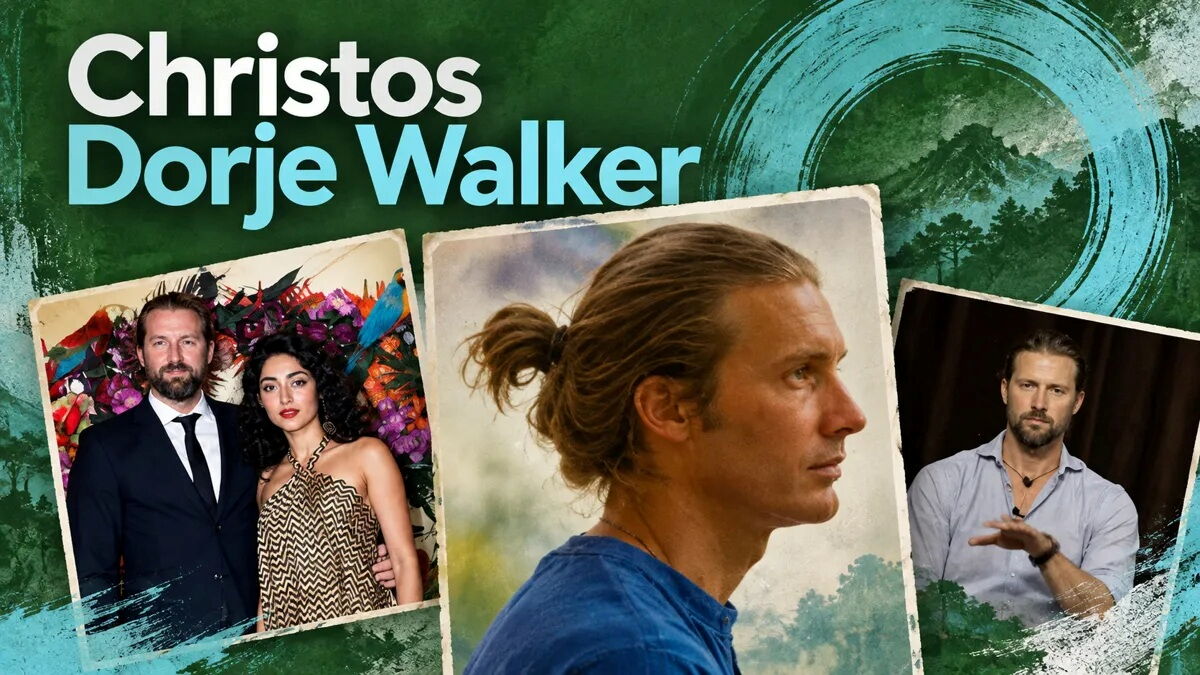
He has appeared in event photography alongside Iranian‑French actress Golshifteh Farahani, notably at a Paris Opera gala on September 24, 2016. His name also surfaces with a minor credit in the 2011 short film “Monkeys,” a small outlier in a career otherwise centered on mental health and contemplative education. In 2024, he publicly shared a post about an ICU and near‑death experience—personal and frank, it underscored a longstanding message: life’s impermanence is both a teacher and a call to presence.
Family and Personal Relationships
One relationship stands clearly within public view: Walker’s connection to Golshifteh Farahani. Multiple profiles and appearances described the two as married around 2015, and they were photographed together at high‑profile events in 2016. Later reports indicate that the relationship changed, but published timelines vary and specific legal details have not been consistently disclosed. The responsible reading is simple: they were publicly linked and later went separate ways, with no formal, universally accepted public record clarifying dates.
Beyond that, Walker has kept his immediate family private. There are no reliable public disclosures about parents, siblings, or children. This restraint fits a wider pattern in his public life: share the work, protect the intimate.
Selected Timeline
| Year/Date | Event |
|---|---|
| Early 2000s (circa) | Ordained as a Tibetan Buddhist monk in his early 20s; begins several years of monastic training. |
| Mid–late 2000s (circa) | Returns to lay life; undertakes training in somatic psychotherapy and deepens Qi Gong practice. |
| 2011 | Listed with a minor credit in the short film “Monkeys.” |
| 2015 (reported) | Marriage to Golshifteh Farahani reported in public profiles. |
| September 24, 2016 | Public appearance with Farahani at the Paris Opera Opening Season Gala. |
| 2020–2021 | Increase in remote meditations and talks during the pandemic period. |
| 2024 | Shares a personal post about an ICU/near‑death experience, reflecting on fragility and gratitude. |
Note: Several entries are approximate or reported rather than formally verified in public records.
Work Philosophy
Walker’s throughline is integration: the contemplative gaze meets the clinician’s toolkit. He teaches that stress and trauma leave fingerprints not just on the mind but on fascia, breath, posture, and sleep. In practice, he favors small, repeatable interventions—gentle Qi Gong sequences, paced breathing, guided inquiry—designed to help the nervous system trust itself again.
His tone avoids the pyrotechnics of spiritual branding. He returns instead to the slow craftsmanship of attention: notice, soften, include; repeat. If meditation is a kiln, then character is the clay, slowly annealed by time, heat, and care.
Community and Impact
By operating at a human scale, Walker’s impact accrues differently. It’s a library of voices—students and clients—who describe an easing in the day, a better night’s sleep, a bit more room in the chest. Workshops focus on practical relief: grounding techniques that can travel into workplaces, hospitals, schools, or the quiet edge of a family kitchen at 2 a.m.
His recordings often touch difficult territory—grief, anger, shame—without theatrics. The approach is to stay with experience, to let the wave crest and fall without forcing a story onto it. The result isn’t dramatic transformation overnight but a sturdier baseline over months and years.
Identity and Naming
“Dorje” is a Tibetan name he uses professionally—a nod to his monastic years and an anchor to that training. It threads through his public channels as a signature and reminder: walk lightly, work deeply, hold steady.
FAQ
Who is Christos Dorje Walker?
An Australian-born meditation teacher, somatic psychotherapist, ceramicist, and former Tibetan Buddhist monk.
What does “Dorje” mean in his name?
“Dorje” is a Tibetan name he uses professionally, reflecting his monastic background.
Was he married to Golshifteh Farahani?
Public profiles reported a marriage around 2015 and they appeared together in 2016; later accounts suggest they separated, with details not consistently public.
Does he have children?
There is no reliable public information about children.
Where does he live now?
Recent public activity suggests he has been based in the UK/Europe.
What kind of meditation does he teach?
A blend of mindfulness, Qi Gong-informed movement, and somatic awareness practices.
Is he active on social media?
Yes, he maintains a modest presence with updates, meditations, and occasional personal posts.
Does he still make pottery?
Yes, ceramics remain part of his public work, often shared through small-batch posts.
Are there any controversies involving him?
No major controversies or legal issues are publicly documented.
Is there a public estimate of his net worth?
No reliable net‑worth figures are available.